December 18, 2024

“Safe, Secure, and Trustworthy Development and Use of Artificial Intelligence”


On December 4, 2024, Title 42 of the Medicare Advantage plan was amended by CMS and the goal was to implement reforms that will ultimately improve healthcare access, quality, and equity for Medicare beneficiaries. This change is related to executive order 14110 by the Biden-Harris Administration, “Safe, Secure, and Trustworthy Development and Use of Artificial Intelligence” which ensures that the development of AI does not jeopardize the advancement of equity and civil rights especially in health organizations. Institutions that do not comply with this amendment will be subjected to possible prosecution.


Artificial Intelligence (AI) is rapidly becoming a prominent force in our society, and its application in healthcare is viewed with both hope and caution. Health information professionals must understand what AI entails, its capabilities, and how to employ it responsibly and ethically. With increased use of AI in healthcare, questions arise about maintaining patient trust and safeguarding data integrity, especially given the discrepancies and accuracy rate of AI-driven data collection and analysis. Additionally, with the increasing automation of revenue cycle operations in healthcare systems, ensuring coding accuracy, billing, and documentation in this evolving landscape becomes even more crucial.


AHIMA and GDHP Partner for First Health Information Summit


In November AHIMA and IFHIMA joined forces and conducted the first global policy summit of health information professionals and presented on public issues related to the health information profession in collaboration with GDHP (Global Digital Health Partnership), a collection of national digital health authorities and the World Health Organization (WHO).


In short, digital health is the “systematic application of information and communications technologies, computer science, and data to support informed decision-making by individuals, the health workforce, and health institutions, for strengthened resilience and improved health and wellness for all.” Digital health includes digital technology-based data fields e.g., data analytics, artificial intelligence, eHealth, and telemedicine, to name a few.


A central concern of the summit was the evolving impact of digital health technologies, in particular the implementation of AI, and the priorities and needs of professionals within the health information sector as they relate to digital health. During the summit, key policies were discussed that are currently impacting the health information profession.


UASAID Recommended Practices


In addition to the global policy health summit, the United States Agency for International Development (USAID) recently released a position paper titled Digital Health which outlined four priorities for programmatic digital health investments. These focal areas underscore the federal government’s strategic emphasis on advancing digital health technologies. These priorities range from strengthening a country’s digital health environment to aligning digital health investments with national architecture. Additional recommended practices outlined by USAID include:


·     Requiring standards to enable integrated health care service delivery at scale.

·     Establishing standards that equate to better coordination of care, and deepening engagement with local partners.

·     Engaging with local partners including the private sector to support the ability of global health funders like USAID to be effective long-term partners to government ministries of health.


Preparing for AI Advancement in the Mid Revenue Cycle


CFO’s and Directors of HIM need to ensure compliance with CMS regulations while preparing for stricter federal-level oversight in addition to monitoring the overall performance of AI solutions. The need for education and training will continue to grow to accurately assess AI-driven data, ensuring that decision-making remains informed and aligned with regulatory standards.


UASI collaborates with healthcare systems to enhance workforce capabilities in exchanging and using relevant healthcare data by reviewing and identify coding and documentation errors that impact revenue integrity and patient care, ensuring the accuracy and integrity of patient information. UASI is committed to supporting the digital transformation of health systems with long-term vision of achieving data interoperability, ensuring equity in the use of AI, and creating globally sustainable health systems.


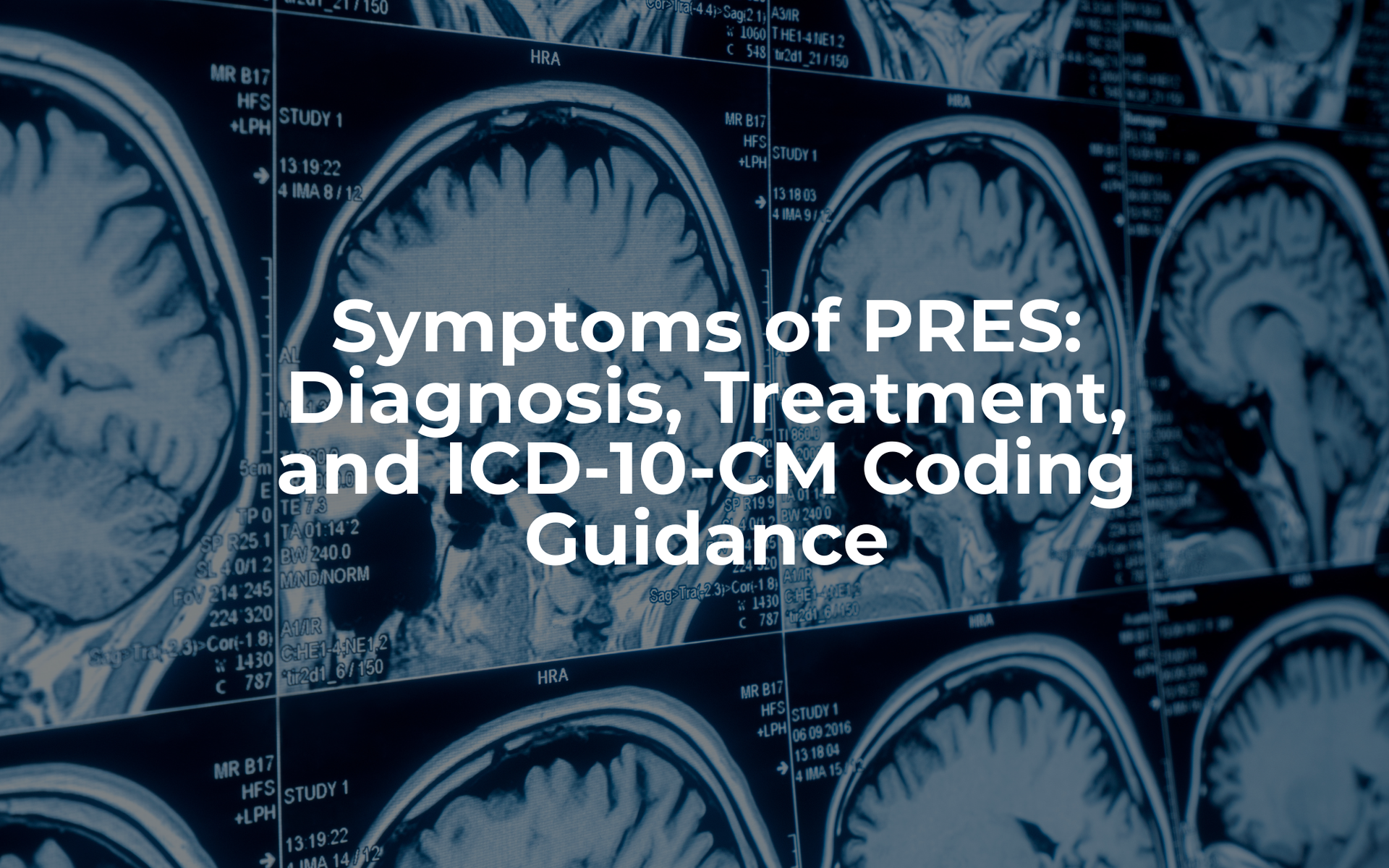
MRI brain scans illustrating symptoms of PRES with title text overlay.
December 9, 2025
Learn the symptoms of PRES, key treatment considerations, ICD-10-CM code I67.83, and documentation tips for CDI and accurate DRG assignment.
Microscopic immune cells interacting in cellular environment, illustrating immune effector activity
By Katie Curry December 1, 2025
Understand ICANS documentation and ICD-10 coding with guidance on the ICANS grading system, ICE score, clinical indicators, and CAR T-cell neurotoxicity.
Fingerstick blood glucose test being performed, illustrating screening and monitoring practices for gestational diabetes.
By Katie Curry November 3, 2025
Gestational Diabetes
Clinician pointing to anatomical kidney model illustrating acute kidney injury.
By Katie Curry October 20, 2025
Learn how to identify, document, and code acute kidney injury (AKI), including diagnostic criteria, staging, ICD-10-CM guidance, and CDI query considerations.
By Katie Curry September 30, 2025
CDI Tip: Capturing Firearm Injury Intent from Other Clinicians’ Documentation What’s New in FY 2026? CMS and ICD-10-CM guidelines now allow documentation by clinicians other than the patient’s provider (e.g., nurses, social workers, trauma team) to be used for assigning external cause codes, including firearm injury intent. This change supports more accurate public health reporting and injury surveillance Key Actions for CDI Specialists Review All Clinical Notes Check ED notes, nursing assessments, social work documentation, and EMS reports for statements about firearm injury intent (e.g., accidental, assault, self-harm, undetermined). Apply the New Intent Hierarchy If intent is clearly documented by any clinician, code accordingly: Accidental: W34 series Assault: X93–X95 series Self-harm: X72–X74 series Undetermined: Y22–Y24 series If no intent is documented, follow the updated guideline: default to undetermined intent for firearm injuries (Y24.9), unless otherwise specified. Query When Needed If conflicting documentation exists (e.g., ED note states “possible assault,” nursing note says “accidental”), query the provider for clarification. Document Source When coding based on another clinician’s note, ensure the documentation is clearly attributed in the record. Pro Tip: Incorporate firearm injury intent review into your trauma and ED CDI workflows. Educate providers that intent matters for coding, quality metrics, and injury prevention programs. Example Clinical Scenario with Query: Setting: ED, trauma bay Patient: 28-year-old male with a through and through gunshot wound of the left thigh; hemodynamically stable. Documentation in record: ED triage RN note: “Pt states he was shot by someone outside a bar.” EMS run sheet: “Bystanders report drive by shooting; single GSW to L thigh.” ED SW note: “Patient reports unknown assailant; denies self-harm.” ED provider note: “GSW L thigh; hemorrhage controlled; analgesia given.” Intent not specified in provider note or discharge summary Query: Documentation in the medical record shows that the patient was injured by a firearm. Please clarify the intent of the firearm injury for this encounter, based on your clinical judgment and the medical record. Assault (injury inflicted by another person) Accidental/unintentional Intentional self-harm Undetermined (unable to determine intent from available information) Other (please specify): _______________________
By Katie Curry September 22, 2025
What is ventricular standstill? SA node is functioning, and P waves are present on EKG. There is no ventricular response, no contractions of the muscle. The presence of complete heart block with no escape rhythm. No cardiac output with the patient in full arrest. May be paroxysmal or prolonged.
Illustration of brain activity used to support CDI guidance and clinical documentation for neuro storm.
By Katie Curry September 7, 2025
What does it mean when “neurostorming” is documented? “Neuro storm” and other similar terms such as autonomic storms, hypothalamic dysregulation syndrome and sympathetic storms all equate to the condition paroxysmal sympathetic hyperactivity (PSH). This syndrome was formally named in 2014 by an international panel looking at preferred nomenclature, definition and diagnostic criteria. PSH is defined as a disorder in the regulation of autonomic function most observed in patients with acute brain injury, most notably severe traumatic brain injury. What are the risk factors for PSH? Traumatic brain injury (TBI) Hypoxic ischemic injury What are the clinical indicators of PSH? Sinus tachycardia Elevated systolic blood pressure Tachypnea associated with respiratory alkalosis Diaphoresis that can progress to dehydration Hyperthermia in some cases Severe cases may have dystonic posturing How is PSH treated? Reducing stimulation Managing hyperthermia and hyperventilation Medications IV Morphine Gabapentin Beta blockers Baclofen Precedex infusion Dantrolene Coding and CDI considerations for the documentation of “neurostorming” The ICD-10-CM condition code most appropriate for reporting of PSH is G90.89, Other disorders of autonomic nervous system. There is no specific code to identify neurostorm or PSH. There are also no instructional notes for the code G90.89. Per the ICD10-CM Official Coding Guidelines, “ If a main term cannot be located, consider a synonym, an eponym, or another alternative term. Once the main term is located, search for subterms, notes, or cross-references. Subterms provide many types of more specific information and must be checked carefully, following all the rules of alphabetization. The main term code entry should not be assigned until all subterm possibilities have been exhausted. During this process, it may be necessary to refer again to the medical record to determine whether any additional information is available to permit assignment of a more specific code. If a subterm cannot be located, the nonessential modifiers following the main term should be reviewed to see whether the subterm may be included there. If not, alternative terms should be considered” Current coding advice notes that when the index is confusing, leading to an inappropriate code, further research is needed when the title of the code suggested by the index clearly does not identify the condition correctly. Regarding the CDI professional, it is allowable to report code G90.89, Other disorders of autonomic nervous system in the instance where “neurostorm” is documented by the provider. A query would not be needed for clarification. References: American Hospital Association (AHA). ICD-10-CM Coding Clinic, Second Quarter 2025, p. 4. Available from: AHA Coding Clinic Centers for Medicare & Medicaid Services (CMS). (2025). ICD-10-CM Official Guidelines for Coding and Reporting. Available from: CMS ICD-10-CM Guidelines Rabinstein, A. (2024). Paroxysmal sympathetic hyperactivity. UpToDate. Available from: UpToDate – Paroxysmal sympathetic hyperactivity
By Katie Curry August 7, 2025
Background: With the 2026 IPPS Proposed Final Rule comes a new diabetes code, E11.A, Type II diabetes mellitus without complications in remission. This is a non-CC/MCC and is assigned to MDC 10. ICD-10-CM Official Guidelines for Coding and Reporting 2026: Section I.C.4.a.1.(b) - “Code E11.A, Type 2 diabetes mellitus without complications in remission, is assigned based on provider documentation that the diabetes mellitus is in remission. If the documentation is unclear as to whether the Type 2 diabetes mellitus has achieved remission, the provider should be queried. For example, the term “resolved” is not synonymous with remission.” Clinical criteria for diabetes in remission: Note* - Remission does not mean cure. Ongoing monitoring is essential as relapse is possible. 1. Prior Diagnosis of Diabetes Mellitus Documented history of type 2 diabetes mellitus, diagnosed using standard criteria: HbA1c ≥ 6.5% Fasting plasma glucose ≥ 126 mg/dL 2-hour plasma glucose ≥ 200 mg/dL during an OGTT Random plasma glucose ≥ 200 mg/dL with classic symptoms 2. Normal or Controlled Glucose Levels Without Medications The patient is not taking any antidiabetic medications (oral agents, insulin, or non-insulin injectables). Glycemic control is sustained through lifestyle modifications, such as diet and exercise. HbA1c < 6.5%, and sometimes < 6.0%, on two occasions at least 6 months apart without pharmacologic therapy. 3. Duration of Remission Partial remission: HbA1c < 6.5% and fasting glucose 100–125 mg/dL for at least 1 year without medications. Complete remission: HbA1c in the normal range (<5.7%) and fasting glucose <100 mg/dL for at least 1 year. Prolonged remission: Complete remission lasting ≥5 years. 4. Documentation Must Include Clear statement that diabetes is in remission or resolution. No current use of diabetes medications. Current HbA1c values. Lifestyle interventions being used. Absence of ongoing diabetic complications (or if present, they are noted as sequelae) 5. What about Type I diabetes? Is remission associated? “Honeymoon Phase” vs. Remission Some individuals newly diagnosed with type 1 diabetes may experience a "honeymoon phase": This is a temporary period (weeks to months) where insulin needs to decrease and blood glucose levels may normalize. However, this is not true remission, as the autoimmune process continues and insulin dependence eventually returns. Clinical Scenario Dr. Doctor, Documentation in your visit note indicates the patient has a documented history of type 2 diabetes mellitus, but current labs show: HbA1c: 5.6% No diabetes medications (e.g., insulin, metformin) currently prescribed Patient reports lifestyle changes (e.g., diet and weight loss) No hyperglycemia documented during this admission or recent visits Query Based on the clinical picture, can you please clarify the patient’s current diabetic status? ☐ Type 2 diabetes mellitus – continue to document and treat as active ☐ History of type 2 diabetes mellitus, currently in remission (no medications, normal glucose values) ☐ Other: ________________
By Katie Curry July 9, 2025
Definition: Neonatal encephalopathy (NE) is a clinically defined syndrome of disturbed neurologic function in the earliest days of life in a term or late preterm infant, manifested by difficulty with initiating and maintaining respiration, depression of tone and reflexes, subnormal level of consciousness, and often seizures. Clinical presentation: Low APGAR scores and/or weak/absent cry in the delivery room. Hyperalert, irritable, lethargic, obtunded. Decreased spontaneous movements, poor tone, blunted or absent primitive reflexes, seizure activity. Breathing and/or feeding difficulties. Documentation Tips: The CDS should review to identify the underlying etiology . (e.g., hypoxic-ischemic event, infection, metabolic disorder). Review clinical indicators that may indicate associated conditions , such as seizures, abnormal imaging, acidosis, or multi-organ dysfunction. Review the documentation for the timing of onset (e.g., at birth, delayed). Common clinical indicators include low APGAR scores, need for resuscitation, abnormal tone, or altered level of consciousness.  ICD-10-CM Coding: P91.811, Neonatal encephalopathy in diseases classified elsewhere P91.819, Neonatal encephalopathy, unspecified Use when the type or etiology of NE is not documented Query Example: To the Attending Neonatologist: Documentation in the medical record indicates the newborn infant delivered from mother with placental abruption demonstrates seizures, abnormal muscle tone, low APGAR scores, and required resuscitation at birth. Imaging showed evidence of cerebral edema. The diagnosis of “neonatal encephalopathy” was documented in the assessment. Query: Based on the clinical indicators, can you clarify the type and cause of the encephalopathy in this newborn? Please select the most appropriate option below or specify another diagnosis: Neonatal encephalopathy due to Hypoxic-ischemic encephalopathy (HIE) Neonatal encephalopathy due to other etiology (please specify) Other (please specify): __________
By Katie Curry May 12, 2025
Definition: Tumor lysis syndrome (TLS) is an oncologic emergency caused by massive tumor cell lysis and the release of large amounts of potassium, phosphate, and uric acid into the systemic circulation. Deposition of uric acid and/or calcium phosphate crystals in the renal tubules can result in acute kidney injury.
Show More