• Preview of the UASI 2026 ICD-10 Coding Tips Book

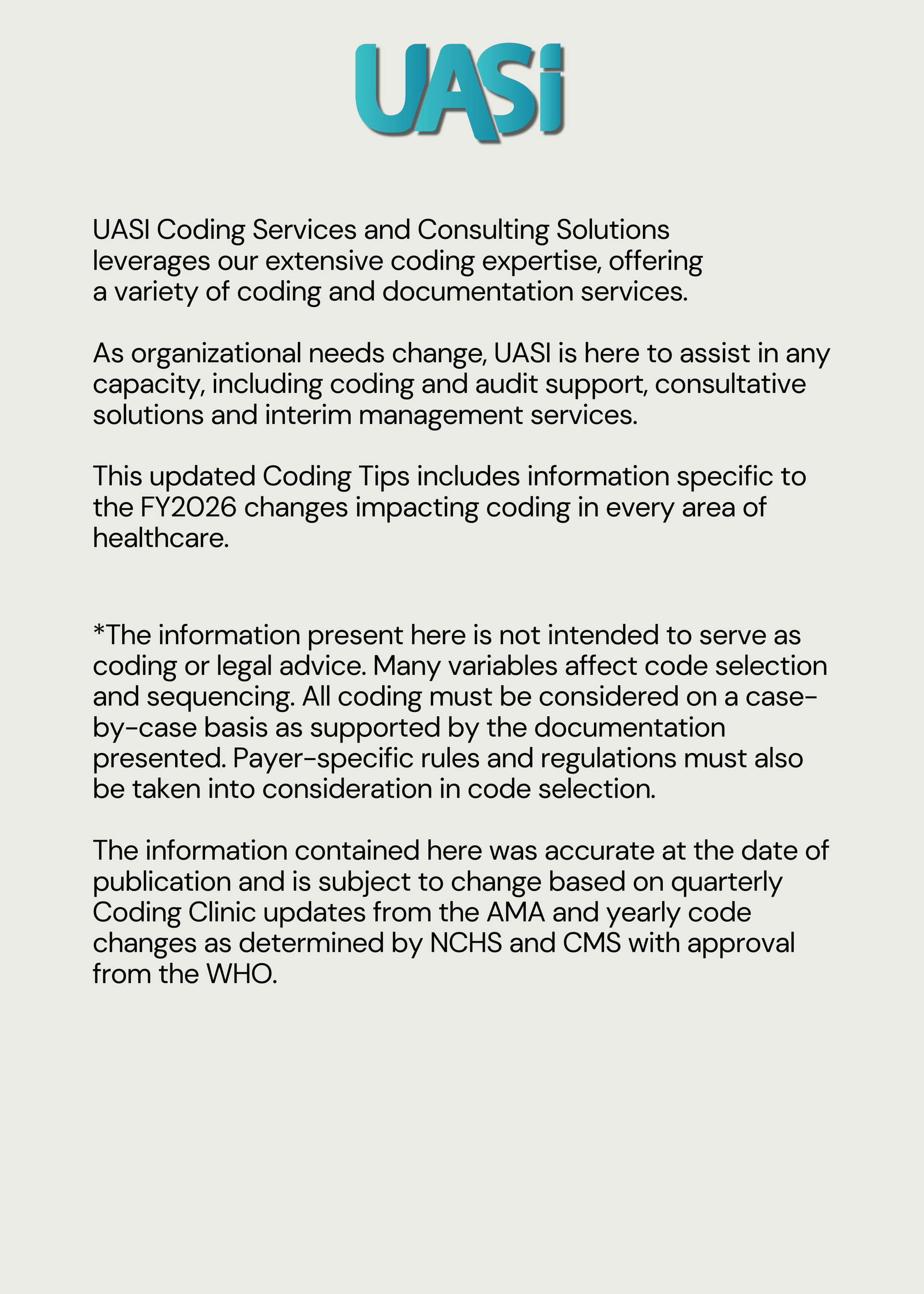
    2026 ICD-10 Coding GuideBook Preview

    Write your caption here
    Button
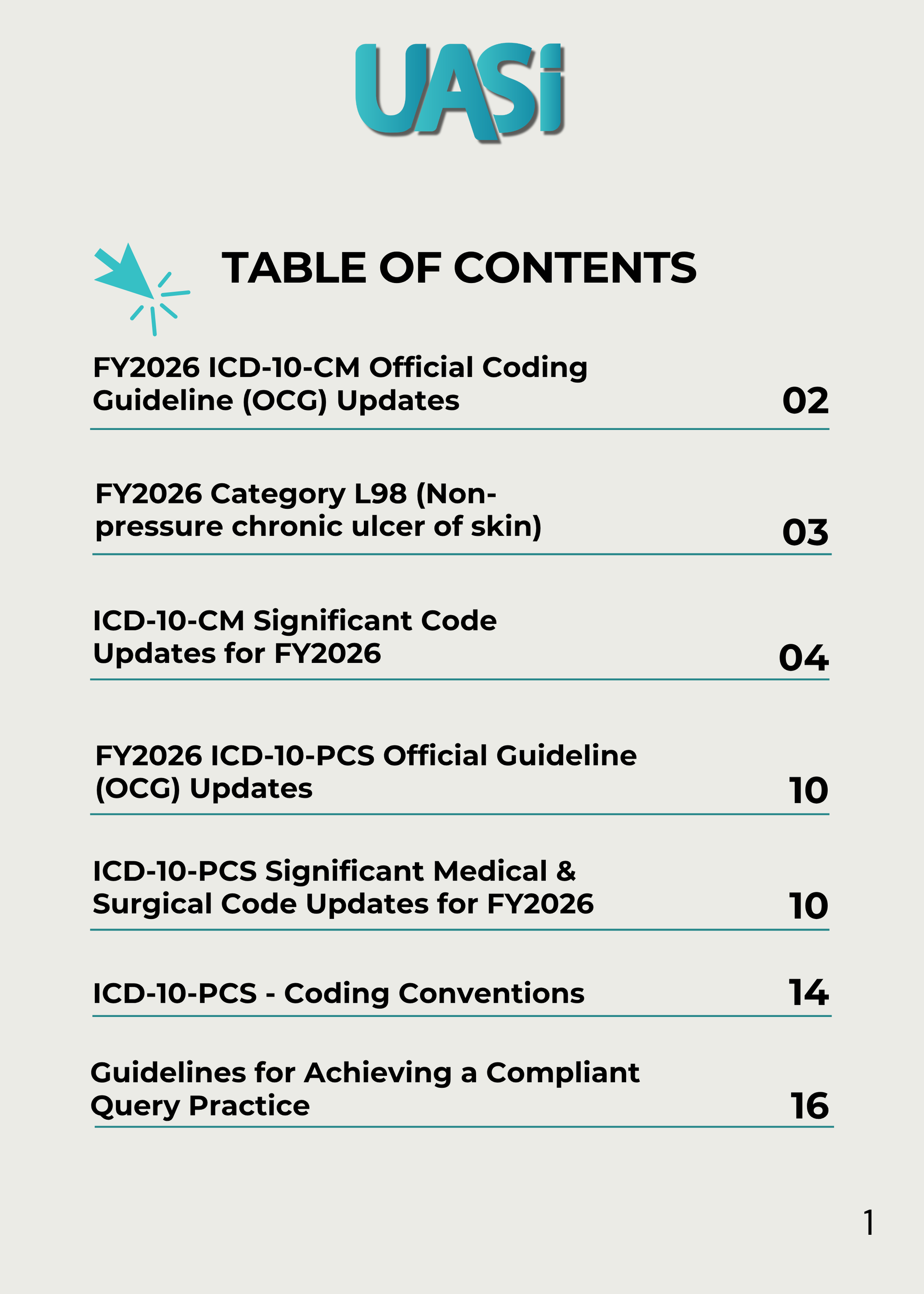
  • Preview page 2 of the UASI 2026 ICD-10 Coding Tip Book

    Slide title

    Write your caption here
    Button
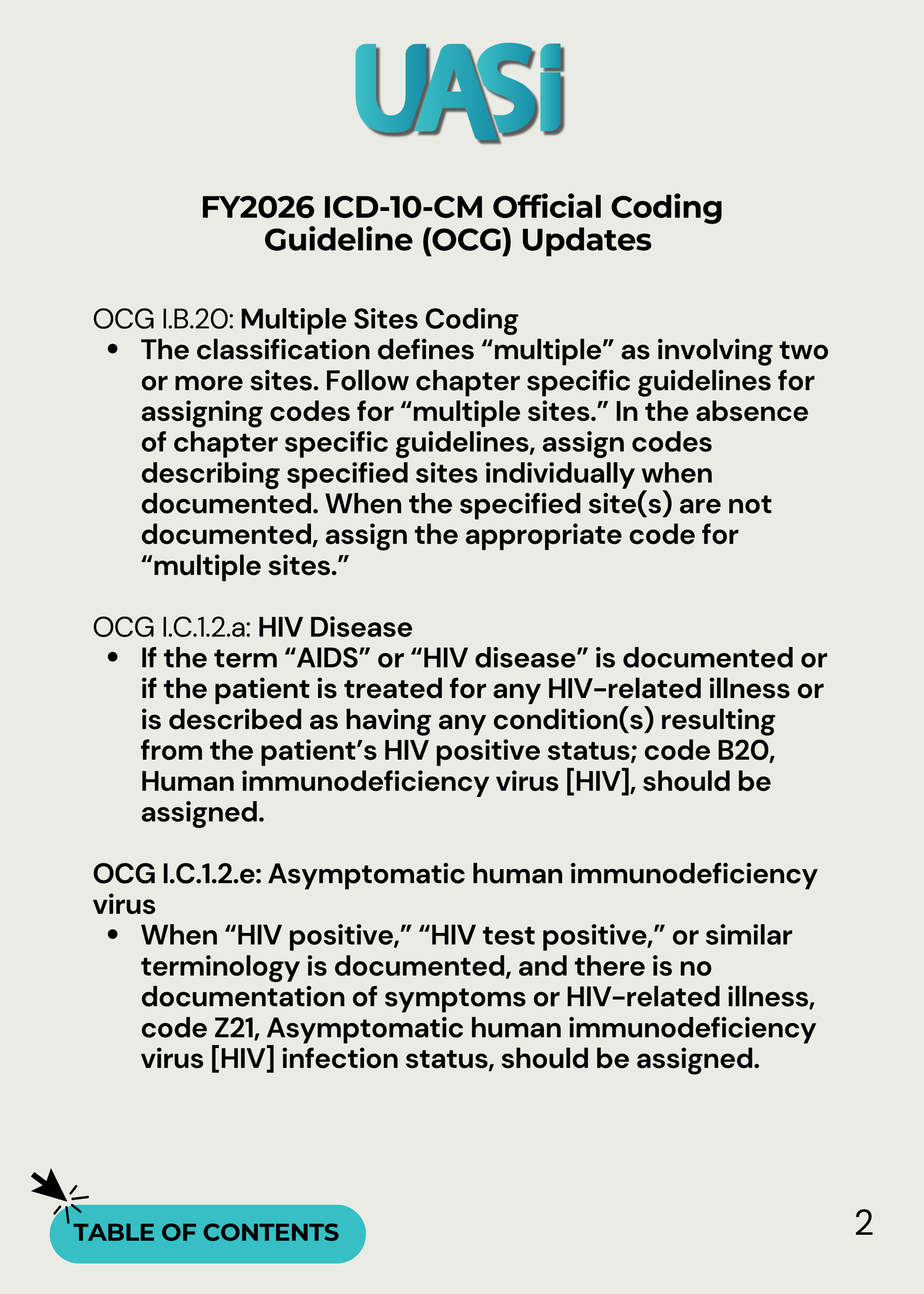
  • Preview page 3 of the UASI 2026 ICD-10 Coding Tip Book

    Slide title

    Write your caption here
    Button
  • Preview page 5 of the UASI 2026 ICD-10 Coding Tip Book

    Slide title

    Write your caption here
    Button
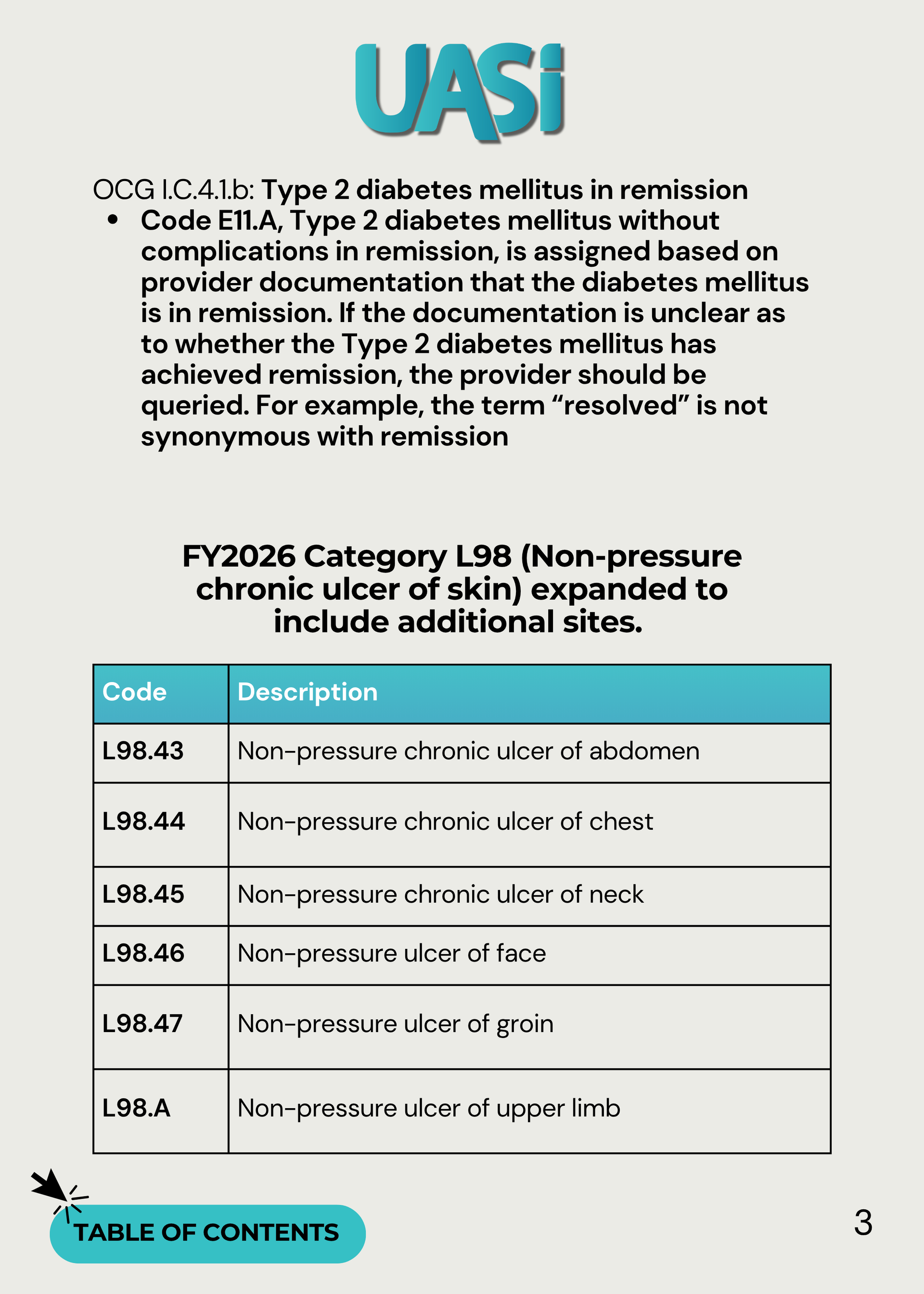
  • Preview page 4 of the UASI 2026 ICD-10 Coding Tip Book

    Slide title

    Write your caption here
    Button

2026 ICD-10 Coding Tip Guidebook Now Available!

Stay Current and Enhance Accuracy with UASI’s Professional Guidance

Coding Tips

Welcome to UASI's Coding Corner! We're here to make your medical coding journey smoother and more enjoyable with our friendly and practical tips. Whether you're just starting out or you've been in the field for years, you'll find something useful here. Our expert advice, handy tricks, and up-to-date industry insights are all geared towards helping you code more accurately and efficiently. So, grab a cup of coffee, get comfy, and explore our tips to take your coding skills to the next level!

Download Now Icon
HCC PASSPORT 2025
Person with glucose monitor representing FY 2026 coding guidance for type 2 diabetes in remission.
By Katie Curry November 5, 2025
Type 2 Diabetes in Remission — Understanding the New E11.A Code for FY 2026
By Katie Curry November 4, 2025
Hyperbaric Oxygen Therapy (HBOT) Coding
Coding chronic inactive gastritis, person holding stomach in pain
By Katie Curry October 30, 2025
Learn how to code chronic inactive gastritis with ICD-10-CM, including documentation requirements, clinical indicators, and query opportunities for CDI.
CRISPR gene therapy for sickle cell disease coding tip graphic.
By Katie Curry October 28, 2025
Explore how CRISPR cell-based gene therapy transforms sickle cell treatment, including clinical impact, FDA updates, and implications for coding and CDI.
Assorted eggs displayed on a wooden surface illustrating egg allergy coding topic.
By Katie Curry October 9, 2025
Learn how to accurately code egg allergies in ICD-10-CM, including documentation requirements, coding nuances, and coding considerations for food allergy reporting.
Coding Tip Cover, Inflammatory Breast Cancer (IBC)
By Katie Curry October 9, 2025
Learn how to accurately identify and code inflammatory breast cancer (IBC) in ICD-10-CM, including diagnostic criteria, documentation needs, and CDI considerations.
Coding drug and alcohol use graphic showing linked brain silhouettes.
By Katie Curry October 9, 2025
Learn how to accurately code drug and alcohol use in ICD-10-CM, including documentation requirements, coding distinctions, and CDI query guidance.
By Katie Curry September 26, 2025
The SURE Procedure (Steerable Ureteroscopic Renal Evacuation) is a minimally invasive technique for kidney stone management using the Controlled Vacuum Assisted Clearance (CVAC) system. This single-use device enables continuous irrigation and aspiration during laser lithotripsy, enhancing stone fragment clearance from the renal collecting system.
Network of figurines and a masked house symbolizing SDOH in inpatient care.
By Katie Curry September 26, 2025
Learn how capturing social determinants of health (SDOH) in inpatient coding improves accuracy, supports equity, and strengthens quality and reimbursement outcomes.
By Katie Curry September 26, 2025
In neuroimaging, “extra-axial” doesn’t mean outside the skull, it means outside the brain parenchyma (the brain tissue itself) but still inside the skull. Intra-axial = within the brain tissue (e.g., gliomas, abscesses). Extra-axial = outside the brain tissue but within the cranial cavity (e.g., meningiomas, metastases on the dura, arachnoid cysts, subdural hematomas). So: Outside the skull would be extracranial. Extra-axial means the lesion is intracranial but not in the brain substance. A simple way to remember: Axial = brain substance Extra-axial = outside the brain substance, but inside the head Looking further into a Transcalvarial mass – A transcalvarial mass is a lesion that extends through the calvarium (skull bones), connecting the intracranial (inside the skull) compartment with the extracranial (outside the skull) space. Key points: The calvarium = the dome-like skull bones that encase the brain. "Transcalvarial" = crossing through the calvarium. Seen with aggressive tumors, metastases, or sometimes infections that erode bone. Imaging will often show a continuous mass that breaches both the inner and outer tables of the skull. So, compared to extra-axial (inside skull, outside brain), a transcalvarial mass goes a step further — it escapes the skull. The question is – what is this type of biopsy considered to be? This is one of those “it depends” situations in coding, because a transcalvarial mass spans both intracranial and extracranial compartments. General coding logic: Intracranial procedures (craniotomy/craniectomy approaches, brain or meningeal biopsies) are coded under intracranial biopsy codes. Extracranial procedures (scalp, subcutaneous, or skull-only masses) are coded with extracranial biopsy codes. For a transcalvarial mass, the deciding factor is where the biopsy specimen is obtained: If the surgeon biopsies the intracranial portion (inside the dura or cranial cavity) → code as intracranial. Some Examples: 00B00ZX – Excision of brain, open approach, diagnostic. 00B73ZX – Excision of cerebral hemisphere, percutaneous approach, diagnostic. 00B24ZX – Excision of dura mater, percutaneous endoscopic approach, diagnostic. If the biopsy is from the extracranial portion (outside the skull or superficial component) → code as extracranial. Some Examples: 0JB00ZX – Excision of scalp subcutaneous tissue and fascia, open approach, diagnostic. 0HB1XZX – Excision of facial skin, external approach, diagnostic. 0QB00ZX – Excision of skull (cranial bone), open approach, diagnostic. If documentation doesn’t specify, query the provider, because the coding pathway hinges on the biopsy site. References: Centers for Medicare & Medicaid Services, & National Center for Health Statistics. (2025). ICD-10-PCS official guidelines for coding and reporting, FY 2025. U.S. Department of Health & Human Services. https://www.cms.gov/medicare/icd-10/2025-icd-10-pcs American Hospital Association. (2017). Biopsy coding when lesions cross boundaries. Coding Clinic for ICD-10-CM/PCS, 4th Quarter, 28–29. American Hospital Association. (Ongoing). Coding Clinic for ICD-10-CM/PCS. American Hospital Association. Greenberg, M. S. (2020). Handbook of neurosurgery (9th ed.). Thieme.
Show More

Stay ahead with UASI's

Monthly Coding Tips


Featuring practical advice, industry updates, and best practices to enhance your coding accuracy and efficiency. Sign up below to receive monthly coding tips directly to your inbox!