
August 27, 2024

Presymptomatic Type 1 Diabetes Staging: ICD-10-CM Updates Effective FY 2025


Overview of ICD-10-CM Updates for Presymptomatic Diabetes

ICD-10 is expanding subcategory E10 to identify stages of Presymptomatic Diabetes Mellitus 


Come October 1, we will now be able to identify diabetes at earlier presymptomatic stages. ICD -10 is expanding subcategory E10 to identify stage1 and 2 presymptomatic diabetes. 


Understanding the Three Stages of Type 1 Diabetes

Type 1 diabetes can now be most accurately understood as a disease that progresses in three distinct stages.


STAGE 1 is the start of type 1 diabetes. Individuals test positive for two or more diabetes-related autoantibodies. The immune system has already begun attacking the insulin-producing beta cells, although there are no symptoms and blood sugar remains normal.


STAGE 2, like stage 1, includes individuals who have two or more diabetes-related autoantibodies, but now, blood sugar levels have become abnormal due to increasing loss of beta cells. There are still no symptoms.


STAGE 3 is when clinical diagnosis typically takes place. By this time, there is significant beta cell loss and individuals generally show common symptoms of type 1 diabetes, which include frequent urination, excessive thirst, weight loss, and fatigue.


Works Cited

Type 1 Diabetes TrialNet. (n.d.). Type 1 diabetes staging classification opens door for intervention. Available at: https://www.trialnet.org/events-news/blog/type-1-diabetes-staging-classification-opens-door-intervention



doctors hovering over operating table
By Katie Curry April 16, 2026
Review clinical indicators, coding rules, and documentation considerations for non-infectious SIRS, including R65.10 vs R65.11 and query guidance.
Graphic title, person sitting down and holding both hands to chest
By Katie Curry April 15, 2026
Learn when to code acute respiratory failure with hypoxia (J96.01), including clinical indicators, documentation tips, and CDI query opportunities.
Graphic image for  ICD-10-PCS Changes for April 1, FY 2026, doctor pointing to computer
By Katie Curry March 16, 2026
Review key ICD-10-CM updates effective April 1, 2026 including Parkinson’s disease indexing changes, respiratory failure coding revisions, and neuroendocrine tumor classification updates.
Child with cerebral palsy smiling during therapy activity with motor impairment and supportive care.
By Katie Curry January 26, 2026
Support accurate cerebral palsy ICD-10-CM coding with CDI guidance on clinical indicators, documentation requirements, and physician query opportunities.
CDI Tip Title Graphic, mom and baby sleeping text reads
By Katie Curry January 13, 2026
Clarify apnea of prematurity clinical indicators, treatment considerations, and CDI coding guidance to support accurate neonatal documentation and query decisions.
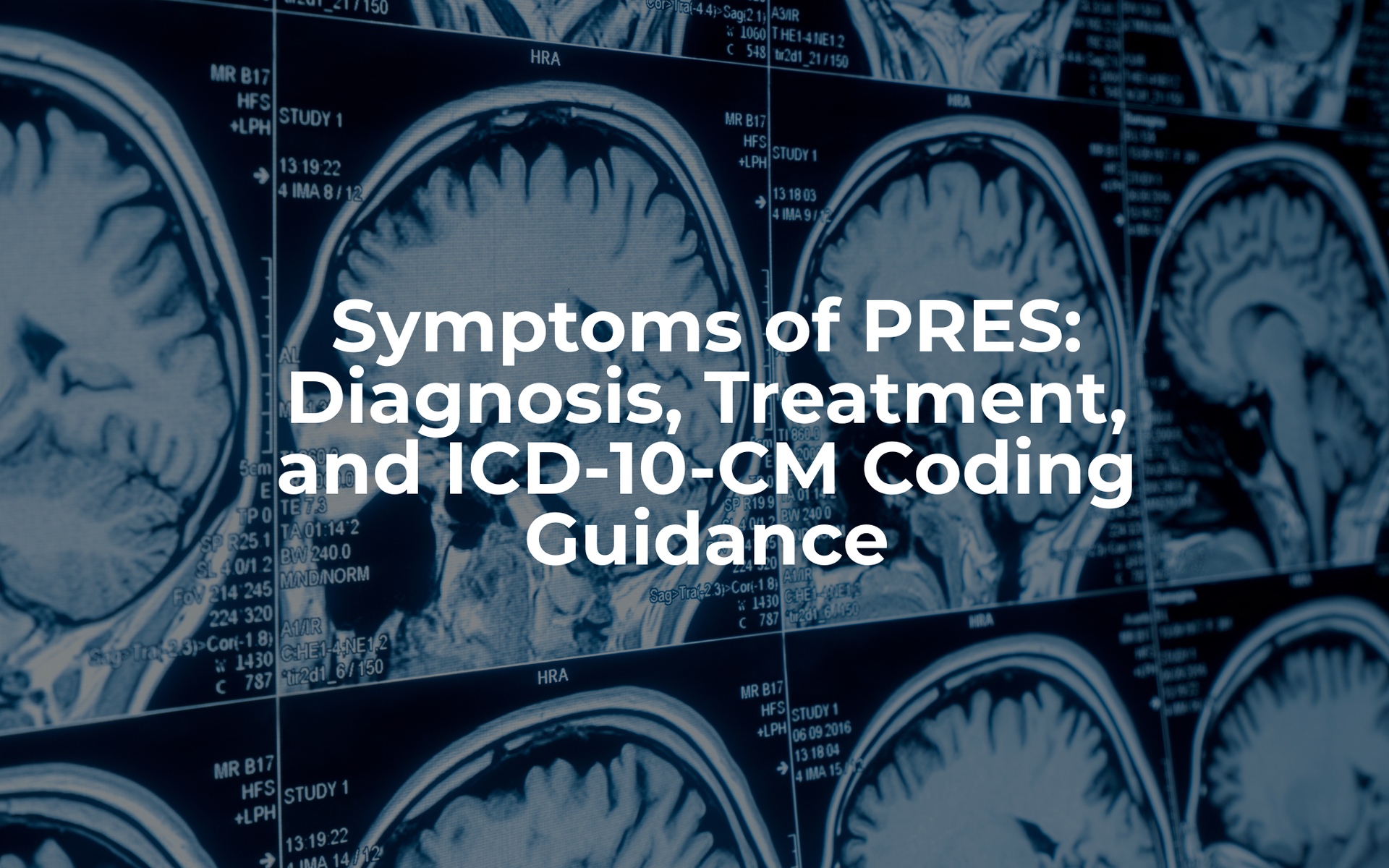
MRI brain scans illustrating symptoms of PRES with title text overlay.
December 9, 2025
Learn the symptoms of PRES, key treatment considerations, ICD-10-CM code I67.83, and documentation tips for CDI and accurate DRG assignment.
Microscopic immune cells interacting in cellular environment, illustrating immune effector activity
By Katie Curry December 1, 2025
Understand ICANS documentation and ICD-10 coding with guidance on the ICANS grading system, ICE score, clinical indicators, and CAR T-cell neurotoxicity.
Fingerstick blood glucose test being performed, illustrating screening and monitoring practices for gestational diabetes.
By Katie Curry November 3, 2025
Define gestational diabetes documentation requirements, key risk factors, and clinical details needed to support accurate ICD-10 coding, severity capture, and quality reporting.
Clinician pointing to anatomical kidney model illustrating acute kidney injury.
By Katie Curry October 20, 2025
Learn how to identify, document, and code acute kidney injury (AKI), including diagnostic criteria, staging, ICD-10-CM guidance, and CDI query considerations.
Blurred hospital scene symbolizing CDI review of firearm injury intent reporting.
By Katie Curry September 30, 2025
Learn how firearm injury intent is documented and reported in ICD-10-CM, including intent categories, external cause codes, and documentation considerations.
Show More