
August 20, 2024

“Out of Sight, Out of Mind” - A Cautionary Note for Hospitals Reducing Their Value-Based Care (VBC) Patient Populations

We’ve all witnessed the ongoing power struggle between health systems and payors regarding how to implement Value-Based Care (VBC) initiatives effectively in a way that benefits everyone, including patients. VBC has the potential to improve quality, reduce costs, and enhance the stability of the entire health system. However, to date, health systems and payors have struggled to agree on contracts that protect both sides from downside risk while providing sufficient financial upside to lure them away from traditional fee-for-service (FFS) medicine.


This frustration has grown so significant that some health systems are pausing new VBC contracts and even withdrawing from existing ones to mitigate further financial losses. This is happening despite a record number of patients enrolling in Medicare Advantage plans.


The consensus in the industry is that VBC has become too big and popular among patients to disappear entirely. However, as hospitals attempt to reduce their financial risk by cutting the number of VBC patients they accept, they must be careful not to create even more risk by falling prey to the age-old idioms: “out of sight, out of mind” and “absent from view, absent from thought.”


What does this mean?


We all know that the more revenue a department generates, the more attention it receives from decision-makers. This approach makes sense under fee-for-service structures where there's no significant risk associated with focusing less on smaller service lines. However, VBC contracts can carry tremendous downside risk if not given the appropriate attention and diligence. This could ultimately lead to a disproportionate amount of financial risk relative to the volume of patients it represents.


If healthcare leaders shift their focus towards the larger population of upside-only FFS patients while reducing their VBC patient population, they could inadvertently make a costly mistake to their bottom line without even realizing it.


Even the most efficient health systems typically have operating margins of just 3-5%. With even a small proportion of VBC patients, if not managed appropriately, it doesn’t take much for those patients to have a significant negative impact on the operating margins that health systems work so hard to achieve.


The bottom line: If your health system is decreasing its VBC contracts or has yet to take on a large volume of these patients, be cautious not to create additional risk to your bottom line by neglecting this crucial patient population. Now, more than ever, tools and strategies for effectively managing your VBC patients are essential. Out of sight cannot be out of mind if you don’t want your Value-Based Care patients chipping away at the margins created by Fee-For-Service patients.



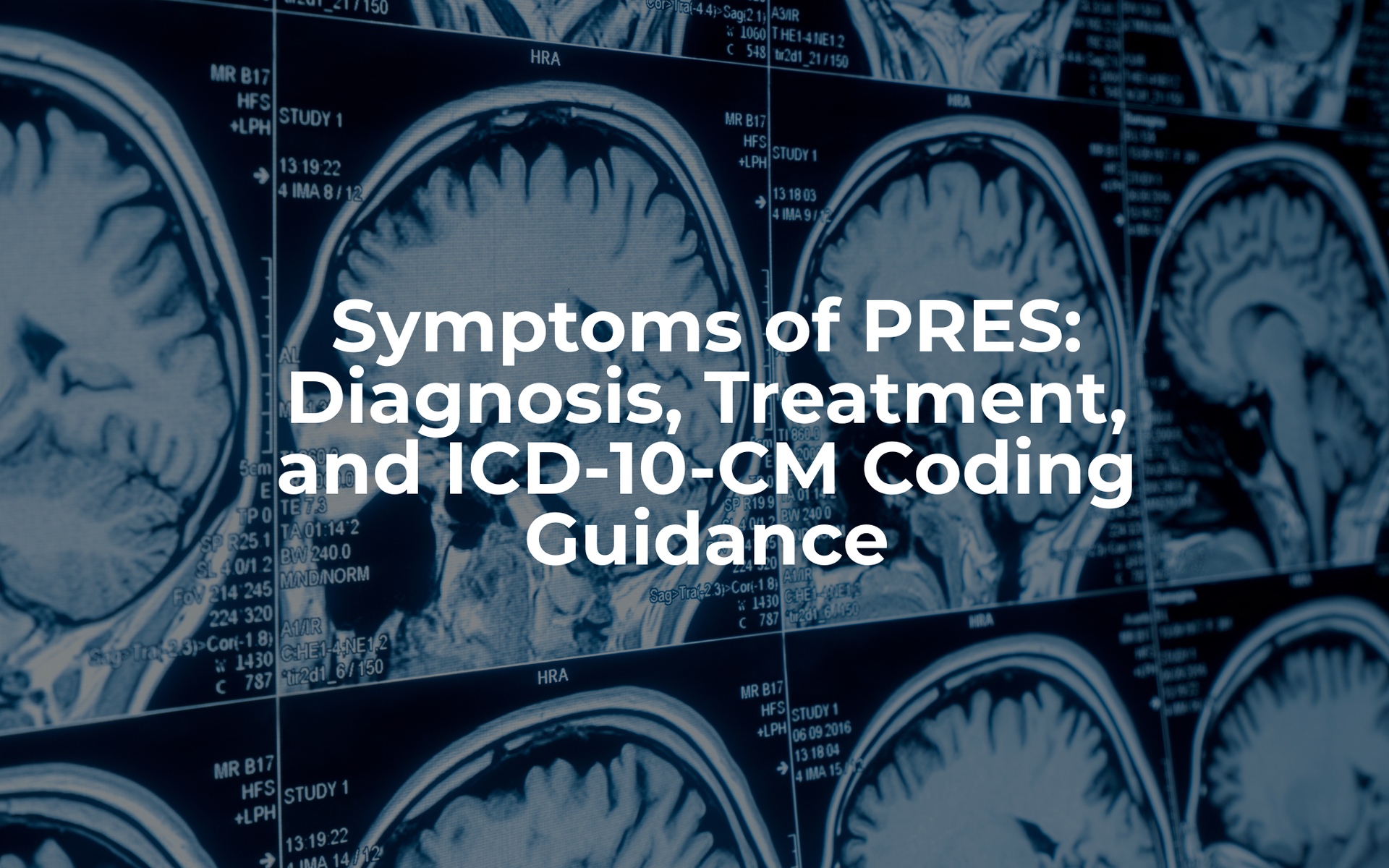
MRI brain scans illustrating symptoms of PRES with title text overlay.
December 9, 2025
Learn the symptoms of PRES, key treatment considerations, ICD-10-CM code I67.83, and documentation tips for CDI and accurate DRG assignment.
Microscopic immune cells interacting in cellular environment, illustrating immune effector activity
By Katie Curry December 1, 2025
Understand ICANS documentation and ICD-10 coding with guidance on the ICANS grading system, ICE score, clinical indicators, and CAR T-cell neurotoxicity.
Fingerstick blood glucose test being performed, illustrating screening and monitoring practices for gestational diabetes.
By Katie Curry November 3, 2025
Gestational Diabetes
Clinician pointing to anatomical kidney model illustrating acute kidney injury.
By Katie Curry October 20, 2025
Learn how to identify, document, and code acute kidney injury (AKI), including diagnostic criteria, staging, ICD-10-CM guidance, and CDI query considerations.
Blurred hospital scene symbolizing CDI review of firearm injury intent reporting.
By Katie Curry September 30, 2025
Learn how firearm injury intent is documented and reported in ICD-10-CM, including intent categories, external cause codes, and documentation considerations.
Title image for the ventricular standstill clinical documentation and coding overview
By Katie Curry September 22, 2025
Learn how ventricular standstill is documented and coded, including clinical indicators, ICD-10-CM guidance, and common documentation considerations.
Title image for neurostorming (PSH) documentation and coding
By Katie Curry September 7, 2025
Learn how neurostorming, also known as paroxysmal sympathetic hyperactivity (PSH), is documented and coded using ICD-10-CM guidance.
By Katie Curry August 7, 2025
Background: With the 2026 IPPS Proposed Final Rule comes a new diabetes code, E11.A, Type II diabetes mellitus without complications in remission. This is a non-CC/MCC and is assigned to MDC 10. ICD-10-CM Official Guidelines for Coding and Reporting 2026: Section I.C.4.a.1.(b) - “Code E11.A, Type 2 diabetes mellitus without complications in remission, is assigned based on provider documentation that the diabetes mellitus is in remission. If the documentation is unclear as to whether the Type 2 diabetes mellitus has achieved remission, the provider should be queried. For example, the term “resolved” is not synonymous with remission.” Clinical criteria for diabetes in remission: Note* - Remission does not mean cure. Ongoing monitoring is essential as relapse is possible. 1. Prior Diagnosis of Diabetes Mellitus Documented history of type 2 diabetes mellitus, diagnosed using standard criteria: HbA1c ≥ 6.5% Fasting plasma glucose ≥ 126 mg/dL 2-hour plasma glucose ≥ 200 mg/dL during an OGTT Random plasma glucose ≥ 200 mg/dL with classic symptoms 2. Normal or Controlled Glucose Levels Without Medications The patient is not taking any antidiabetic medications (oral agents, insulin, or non-insulin injectables). Glycemic control is sustained through lifestyle modifications, such as diet and exercise. HbA1c < 6.5%, and sometimes < 6.0%, on two occasions at least 6 months apart without pharmacologic therapy. 3. Duration of Remission Partial remission: HbA1c < 6.5% and fasting glucose 100–125 mg/dL for at least 1 year without medications. Complete remission: HbA1c in the normal range (<5.7%) and fasting glucose <100 mg/dL for at least 1 year. Prolonged remission: Complete remission lasting ≥5 years. 4. Documentation Must Include Clear statement that diabetes is in remission or resolution. No current use of diabetes medications. Current HbA1c values. Lifestyle interventions being used. Absence of ongoing diabetic complications (or if present, they are noted as sequelae) 5. What about Type I diabetes? Is remission associated? “Honeymoon Phase” vs. Remission Some individuals newly diagnosed with type 1 diabetes may experience a "honeymoon phase": This is a temporary period (weeks to months) where insulin needs to decrease and blood glucose levels may normalize. However, this is not true remission, as the autoimmune process continues and insulin dependence eventually returns. Clinical Scenario Dr. Doctor, Documentation in your visit note indicates the patient has a documented history of type 2 diabetes mellitus, but current labs show: HbA1c: 5.6% No diabetes medications (e.g., insulin, metformin) currently prescribed Patient reports lifestyle changes (e.g., diet and weight loss) No hyperglycemia documented during this admission or recent visits Query Based on the clinical picture, can you please clarify the patient’s current diabetic status? ☐ Type 2 diabetes mellitus – continue to document and treat as active ☐ History of type 2 diabetes mellitus, currently in remission (no medications, normal glucose values) ☐ Other: ________________
By Katie Curry July 9, 2025
Definition: Neonatal encephalopathy (NE) is a clinically defined syndrome of disturbed neurologic function in the earliest days of life in a term or late preterm infant, manifested by difficulty with initiating and maintaining respiration, depression of tone and reflexes, subnormal level of consciousness, and often seizures. Clinical presentation: Low APGAR scores and/or weak/absent cry in the delivery room. Hyperalert, irritable, lethargic, obtunded. Decreased spontaneous movements, poor tone, blunted or absent primitive reflexes, seizure activity. Breathing and/or feeding difficulties. Documentation Tips: The CDS should review to identify the underlying etiology . (e.g., hypoxic-ischemic event, infection, metabolic disorder). Review clinical indicators that may indicate associated conditions , such as seizures, abnormal imaging, acidosis, or multi-organ dysfunction. Review the documentation for the timing of onset (e.g., at birth, delayed). Common clinical indicators include low APGAR scores, need for resuscitation, abnormal tone, or altered level of consciousness.  ICD-10-CM Coding: P91.811, Neonatal encephalopathy in diseases classified elsewhere P91.819, Neonatal encephalopathy, unspecified Use when the type or etiology of NE is not documented Query Example: To the Attending Neonatologist: Documentation in the medical record indicates the newborn infant delivered from mother with placental abruption demonstrates seizures, abnormal muscle tone, low APGAR scores, and required resuscitation at birth. Imaging showed evidence of cerebral edema. The diagnosis of “neonatal encephalopathy” was documented in the assessment. Query: Based on the clinical indicators, can you clarify the type and cause of the encephalopathy in this newborn? Please select the most appropriate option below or specify another diagnosis: Neonatal encephalopathy due to Hypoxic-ischemic encephalopathy (HIE) Neonatal encephalopathy due to other etiology (please specify) Other (please specify): __________
By Katie Curry May 12, 2025
Definition: Tumor lysis syndrome (TLS) is an oncologic emergency caused by massive tumor cell lysis and the release of large amounts of potassium, phosphate, and uric acid into the systemic circulation. Deposition of uric acid and/or calcium phosphate crystals in the renal tubules can result in acute kidney injury.
Show More