
March 25, 2025

The question we hear most often:
“What is this query for and why do I have to answer it?”


We often incorrectly assume that because a physician is an expert in medical procedures, they are also an expert in documenting those procedures.

Physicians are responsible for the care and treatment of millions of patients every single day who put their lives, quite literally, in the physician’s hands. However, to consistently maintain and improve upon safety and effectiveness standards, the system relies on more than just the skill and actions of the provider – it also relies on accurate and comprehensive clinical documentation.


Precise and comprehensive clinical documentation is essential for:

• Appropriate Reimbursement

• Quality Metrics and Reporting

• Consistency of Treatment Plans


Central to this process is the physician query, a tool employed by medical coders and Clinical Documentation Integrity (CDI) professionals to clarify ambiguities, inconsistencies, or gaps in medical records. For providers, understanding why a query is in their inbox could help change a query from a source of frustration into an opportunity for patient safety and appropriate reimbursement.

Purpose of Physician Queries

Ensuring Accurate Diagnosis Coding: Queries help confirm that documented diagnoses are precise and align with clinical indicators, facilitating correct code assignment.


Clarifying Procedures: They seek to clarify details about procedures performed, ensuring that the documentation accurately reflects the services provided.


Resolving Documentation Discrepancies: Queries address conflicting, imprecise, incomplete, or ambiguous information within the medical record, promoting consistency and clarity.


Establishing Cause-and-Effect Relationships: They aim to confirm associations between conditions, such as linking a symptom to an underlying diagnosis, which is crucial for accurate coding, treatment planning and reimbursement.


5 Types of Physician Queries & Examples

Diagnosis Clarification Queries

These queries seek to specify or confirm diagnoses that are not clearly documented but are supported by clinical indicators.

Example: A patient's symptoms and test results suggest sepsis, but the diagnosis is not explicitly stated, a query would seek to confirm this condition.


Procedure Clarification Queries

Aimed at obtaining detailed information about procedures performed, these ensure that the documentation accurately reflects the services rendered.

Example: Clarifying whether a procedure was open or laparoscopic can impact coding and reimbursement.


Conflicting Documentation Queries

When different parts of the medical record contain contradictory information, queries are used to resolve these discrepancies.

Example: If one note indicates a diagnosis of pneumonia while another suggests bronchitis, a query would seek clarification.


Present-on-Admission (POA) Indicator Queries

These queries determine whether a condition was present at the time of hospital admission, which affects quality metrics and reimbursement.

Example: Not documenting the presence of a DVT on admission could result in a Hospital Acquired Condition (HAC).


Cause-and-Effect Relationship Queries

Used to establish connections between conditions

Example: Confirming that a patient’s GI bleed is due to the use of anticoagulants


Best Practices for Physicians Responding to Queries


To optimize the query process and enhance clinical documentation, physicians should consider the following best practices:


Make Timely Responses a Habit: Prevents delays in billing submission, ensuring that claims are processed efficiently and reducing the risk of denied or delayed reimbursements due to incomplete or unclear documentation.


Provide Clear and Specific Documentation: By offering detailed and precise information in responses, physicians help eliminate ambiguities, making it easier for coders and auditors to accurately capture the patient's condition and treatments, thereby reducing the likelihood of subsequent queries.


Engage in Dialogue with your CDI Professionals: Engage in dialogue with your CDI partners to understand documentation requirements and reduce future queries.


Participate in Education Opportunities: Commit to attending regular training sessions or workshops on documentation standards, coding updates, and compliance guidelines to stay current and minimize errors in clinical documentation.


One 2021 health system study found that 42% of query responses resulted in a MS-DRG change, leading to almost $9.8 million per month in reimbursements from queries. Investment, education and training around improving clinical documentation integrity can have massive implications.


Reach out to UASI for expert support in enhancing clinical documentation and responding to physician queries effectively. Our tailored solutions can help improve accuracy, reduce query frequency, and increase reimbursement. Visit our website to learn how our 40 years of industry experience can optimize your documentation efforts and boost your revenue cycle.


Sources:


Provider Queries 101
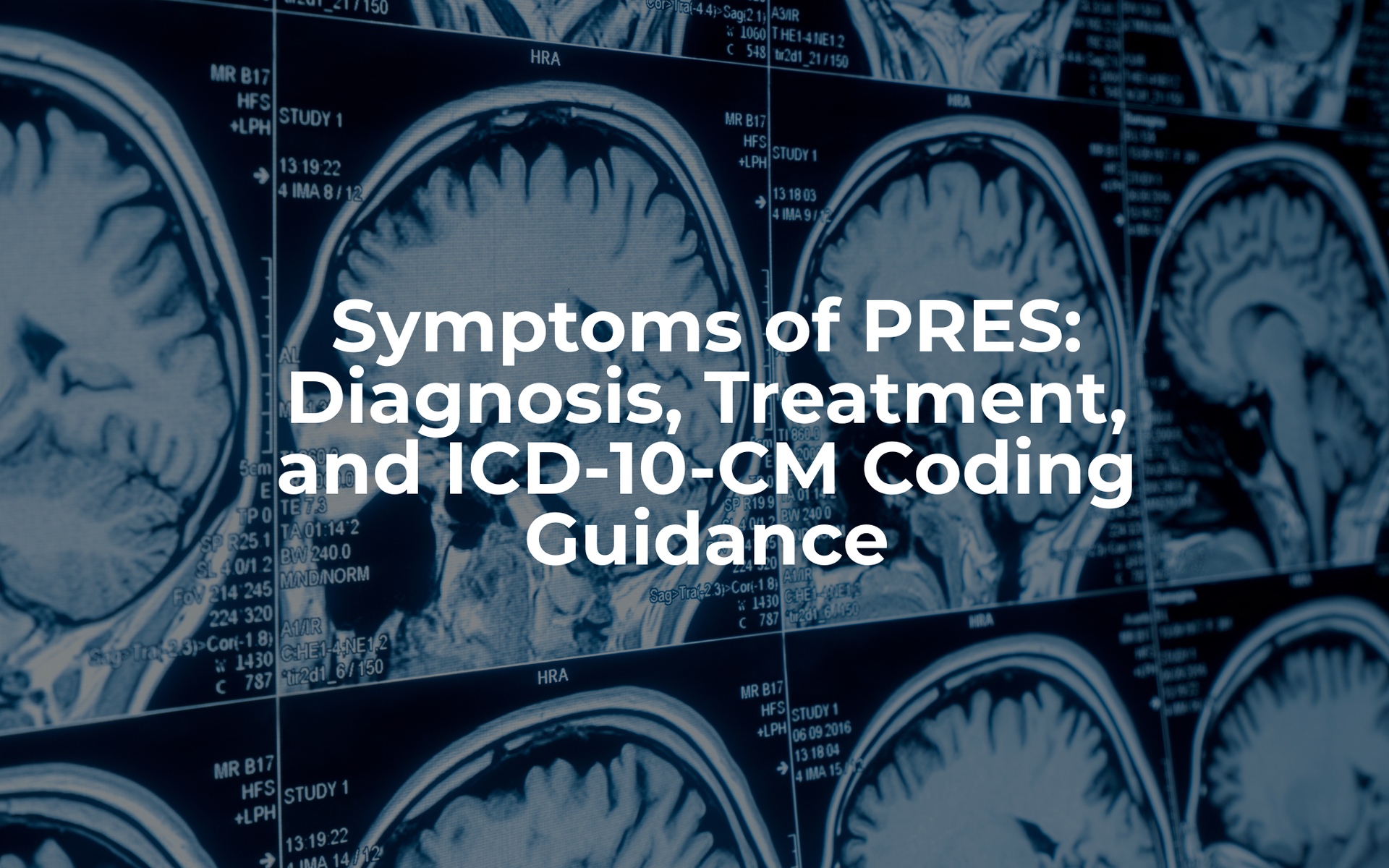
MRI brain scans illustrating symptoms of PRES with title text overlay.
December 9, 2025
Learn the symptoms of PRES, key treatment considerations, ICD-10-CM code I67.83, and documentation tips for CDI and accurate DRG assignment.
Microscopic immune cells interacting in cellular environment, illustrating immune effector activity
By Katie Curry December 1, 2025
Understand ICANS documentation and ICD-10 coding with guidance on the ICANS grading system, ICE score, clinical indicators, and CAR T-cell neurotoxicity.
Fingerstick blood glucose test being performed, illustrating screening and monitoring practices for gestational diabetes.
By Katie Curry November 3, 2025
Gestational Diabetes
Clinician pointing to anatomical kidney model illustrating acute kidney injury.
By Katie Curry October 20, 2025
Learn how to identify, document, and code acute kidney injury (AKI), including diagnostic criteria, staging, ICD-10-CM guidance, and CDI query considerations.
By Katie Curry September 30, 2025
CDI Tip: Capturing Firearm Injury Intent from Other Clinicians’ Documentation What’s New in FY 2026? CMS and ICD-10-CM guidelines now allow documentation by clinicians other than the patient’s provider (e.g., nurses, social workers, trauma team) to be used for assigning external cause codes, including firearm injury intent. This change supports more accurate public health reporting and injury surveillance Key Actions for CDI Specialists Review All Clinical Notes Check ED notes, nursing assessments, social work documentation, and EMS reports for statements about firearm injury intent (e.g., accidental, assault, self-harm, undetermined). Apply the New Intent Hierarchy If intent is clearly documented by any clinician, code accordingly: Accidental: W34 series Assault: X93–X95 series Self-harm: X72–X74 series Undetermined: Y22–Y24 series If no intent is documented, follow the updated guideline: default to undetermined intent for firearm injuries (Y24.9), unless otherwise specified. Query When Needed If conflicting documentation exists (e.g., ED note states “possible assault,” nursing note says “accidental”), query the provider for clarification. Document Source When coding based on another clinician’s note, ensure the documentation is clearly attributed in the record. Pro Tip: Incorporate firearm injury intent review into your trauma and ED CDI workflows. Educate providers that intent matters for coding, quality metrics, and injury prevention programs. Example Clinical Scenario with Query: Setting: ED, trauma bay Patient: 28-year-old male with a through and through gunshot wound of the left thigh; hemodynamically stable. Documentation in record: ED triage RN note: “Pt states he was shot by someone outside a bar.” EMS run sheet: “Bystanders report drive by shooting; single GSW to L thigh.” ED SW note: “Patient reports unknown assailant; denies self-harm.” ED provider note: “GSW L thigh; hemorrhage controlled; analgesia given.” Intent not specified in provider note or discharge summary Query: Documentation in the medical record shows that the patient was injured by a firearm. Please clarify the intent of the firearm injury for this encounter, based on your clinical judgment and the medical record. Assault (injury inflicted by another person) Accidental/unintentional Intentional self-harm Undetermined (unable to determine intent from available information) Other (please specify): _______________________
By Katie Curry September 22, 2025
What is ventricular standstill? SA node is functioning, and P waves are present on EKG. There is no ventricular response, no contractions of the muscle. The presence of complete heart block with no escape rhythm. No cardiac output with the patient in full arrest. May be paroxysmal or prolonged.
Illustration of brain activity used to support CDI guidance and clinical documentation for neuro storm.
By Katie Curry September 7, 2025
What does it mean when “neurostorming” is documented? “Neuro storm” and other similar terms such as autonomic storms, hypothalamic dysregulation syndrome and sympathetic storms all equate to the condition paroxysmal sympathetic hyperactivity (PSH). This syndrome was formally named in 2014 by an international panel looking at preferred nomenclature, definition and diagnostic criteria. PSH is defined as a disorder in the regulation of autonomic function most observed in patients with acute brain injury, most notably severe traumatic brain injury. What are the risk factors for PSH? Traumatic brain injury (TBI) Hypoxic ischemic injury What are the clinical indicators of PSH? Sinus tachycardia Elevated systolic blood pressure Tachypnea associated with respiratory alkalosis Diaphoresis that can progress to dehydration Hyperthermia in some cases Severe cases may have dystonic posturing How is PSH treated? Reducing stimulation Managing hyperthermia and hyperventilation Medications IV Morphine Gabapentin Beta blockers Baclofen Precedex infusion Dantrolene Coding and CDI considerations for the documentation of “neurostorming” The ICD-10-CM condition code most appropriate for reporting of PSH is G90.89, Other disorders of autonomic nervous system. There is no specific code to identify neurostorm or PSH. There are also no instructional notes for the code G90.89. Per the ICD10-CM Official Coding Guidelines, “ If a main term cannot be located, consider a synonym, an eponym, or another alternative term. Once the main term is located, search for subterms, notes, or cross-references. Subterms provide many types of more specific information and must be checked carefully, following all the rules of alphabetization. The main term code entry should not be assigned until all subterm possibilities have been exhausted. During this process, it may be necessary to refer again to the medical record to determine whether any additional information is available to permit assignment of a more specific code. If a subterm cannot be located, the nonessential modifiers following the main term should be reviewed to see whether the subterm may be included there. If not, alternative terms should be considered” Current coding advice notes that when the index is confusing, leading to an inappropriate code, further research is needed when the title of the code suggested by the index clearly does not identify the condition correctly. Regarding the CDI professional, it is allowable to report code G90.89, Other disorders of autonomic nervous system in the instance where “neurostorm” is documented by the provider. A query would not be needed for clarification. References: American Hospital Association (AHA). ICD-10-CM Coding Clinic, Second Quarter 2025, p. 4. Available from: AHA Coding Clinic Centers for Medicare & Medicaid Services (CMS). (2025). ICD-10-CM Official Guidelines for Coding and Reporting. Available from: CMS ICD-10-CM Guidelines Rabinstein, A. (2024). Paroxysmal sympathetic hyperactivity. UpToDate. Available from: UpToDate – Paroxysmal sympathetic hyperactivity
By Katie Curry August 7, 2025
Background: With the 2026 IPPS Proposed Final Rule comes a new diabetes code, E11.A, Type II diabetes mellitus without complications in remission. This is a non-CC/MCC and is assigned to MDC 10. ICD-10-CM Official Guidelines for Coding and Reporting 2026: Section I.C.4.a.1.(b) - “Code E11.A, Type 2 diabetes mellitus without complications in remission, is assigned based on provider documentation that the diabetes mellitus is in remission. If the documentation is unclear as to whether the Type 2 diabetes mellitus has achieved remission, the provider should be queried. For example, the term “resolved” is not synonymous with remission.” Clinical criteria for diabetes in remission: Note* - Remission does not mean cure. Ongoing monitoring is essential as relapse is possible. 1. Prior Diagnosis of Diabetes Mellitus Documented history of type 2 diabetes mellitus, diagnosed using standard criteria: HbA1c ≥ 6.5% Fasting plasma glucose ≥ 126 mg/dL 2-hour plasma glucose ≥ 200 mg/dL during an OGTT Random plasma glucose ≥ 200 mg/dL with classic symptoms 2. Normal or Controlled Glucose Levels Without Medications The patient is not taking any antidiabetic medications (oral agents, insulin, or non-insulin injectables). Glycemic control is sustained through lifestyle modifications, such as diet and exercise. HbA1c < 6.5%, and sometimes < 6.0%, on two occasions at least 6 months apart without pharmacologic therapy. 3. Duration of Remission Partial remission: HbA1c < 6.5% and fasting glucose 100–125 mg/dL for at least 1 year without medications. Complete remission: HbA1c in the normal range (<5.7%) and fasting glucose <100 mg/dL for at least 1 year. Prolonged remission: Complete remission lasting ≥5 years. 4. Documentation Must Include Clear statement that diabetes is in remission or resolution. No current use of diabetes medications. Current HbA1c values. Lifestyle interventions being used. Absence of ongoing diabetic complications (or if present, they are noted as sequelae) 5. What about Type I diabetes? Is remission associated? “Honeymoon Phase” vs. Remission Some individuals newly diagnosed with type 1 diabetes may experience a "honeymoon phase": This is a temporary period (weeks to months) where insulin needs to decrease and blood glucose levels may normalize. However, this is not true remission, as the autoimmune process continues and insulin dependence eventually returns. Clinical Scenario Dr. Doctor, Documentation in your visit note indicates the patient has a documented history of type 2 diabetes mellitus, but current labs show: HbA1c: 5.6% No diabetes medications (e.g., insulin, metformin) currently prescribed Patient reports lifestyle changes (e.g., diet and weight loss) No hyperglycemia documented during this admission or recent visits Query Based on the clinical picture, can you please clarify the patient’s current diabetic status? ☐ Type 2 diabetes mellitus – continue to document and treat as active ☐ History of type 2 diabetes mellitus, currently in remission (no medications, normal glucose values) ☐ Other: ________________
By Katie Curry July 9, 2025
Definition: Neonatal encephalopathy (NE) is a clinically defined syndrome of disturbed neurologic function in the earliest days of life in a term or late preterm infant, manifested by difficulty with initiating and maintaining respiration, depression of tone and reflexes, subnormal level of consciousness, and often seizures. Clinical presentation: Low APGAR scores and/or weak/absent cry in the delivery room. Hyperalert, irritable, lethargic, obtunded. Decreased spontaneous movements, poor tone, blunted or absent primitive reflexes, seizure activity. Breathing and/or feeding difficulties. Documentation Tips: The CDS should review to identify the underlying etiology . (e.g., hypoxic-ischemic event, infection, metabolic disorder). Review clinical indicators that may indicate associated conditions , such as seizures, abnormal imaging, acidosis, or multi-organ dysfunction. Review the documentation for the timing of onset (e.g., at birth, delayed). Common clinical indicators include low APGAR scores, need for resuscitation, abnormal tone, or altered level of consciousness.  ICD-10-CM Coding: P91.811, Neonatal encephalopathy in diseases classified elsewhere P91.819, Neonatal encephalopathy, unspecified Use when the type or etiology of NE is not documented Query Example: To the Attending Neonatologist: Documentation in the medical record indicates the newborn infant delivered from mother with placental abruption demonstrates seizures, abnormal muscle tone, low APGAR scores, and required resuscitation at birth. Imaging showed evidence of cerebral edema. The diagnosis of “neonatal encephalopathy” was documented in the assessment. Query: Based on the clinical indicators, can you clarify the type and cause of the encephalopathy in this newborn? Please select the most appropriate option below or specify another diagnosis: Neonatal encephalopathy due to Hypoxic-ischemic encephalopathy (HIE) Neonatal encephalopathy due to other etiology (please specify) Other (please specify): __________
By Katie Curry May 12, 2025
Definition: Tumor lysis syndrome (TLS) is an oncologic emergency caused by massive tumor cell lysis and the release of large amounts of potassium, phosphate, and uric acid into the systemic circulation. Deposition of uric acid and/or calcium phosphate crystals in the renal tubules can result in acute kidney injury.
Show More