
Melanie Perrault, RHIA, CDIP, CCS • September 26, 2025
Reporting the Calyxo SURE Procedure With the CVac System: Clinical Documentation and Coding Guidance
Overview of the Calyxo Sure Procedure and CVac System
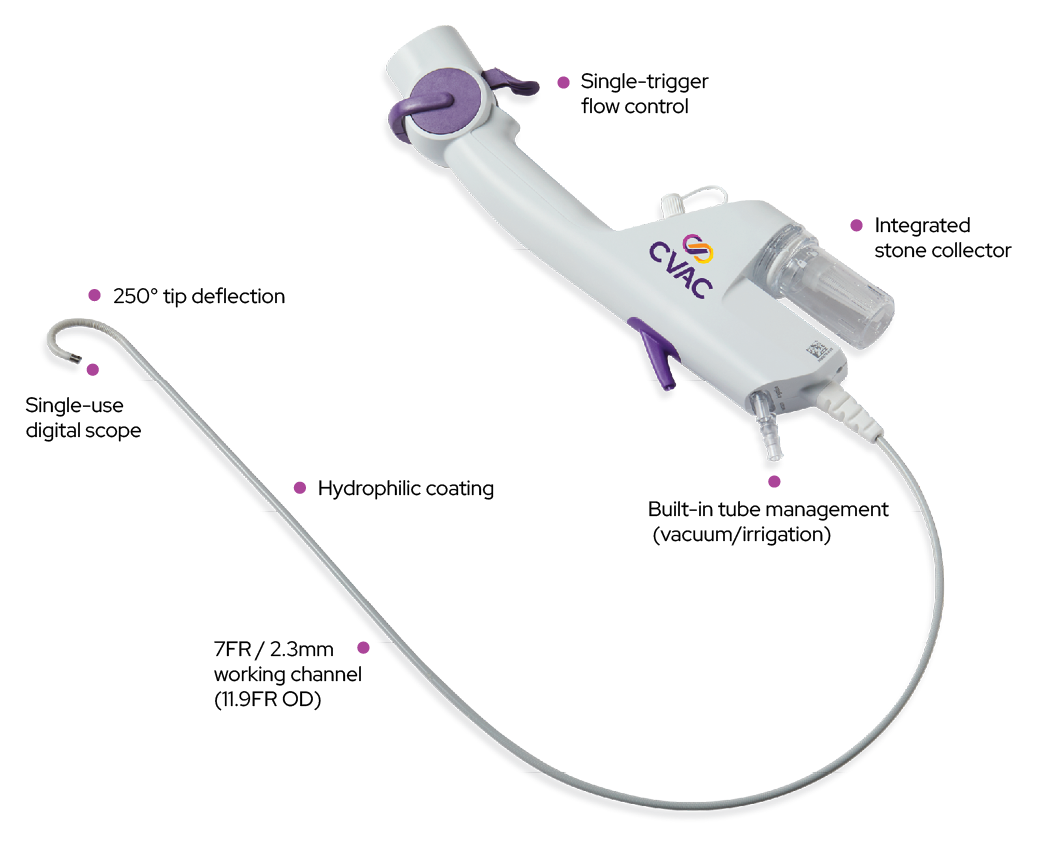
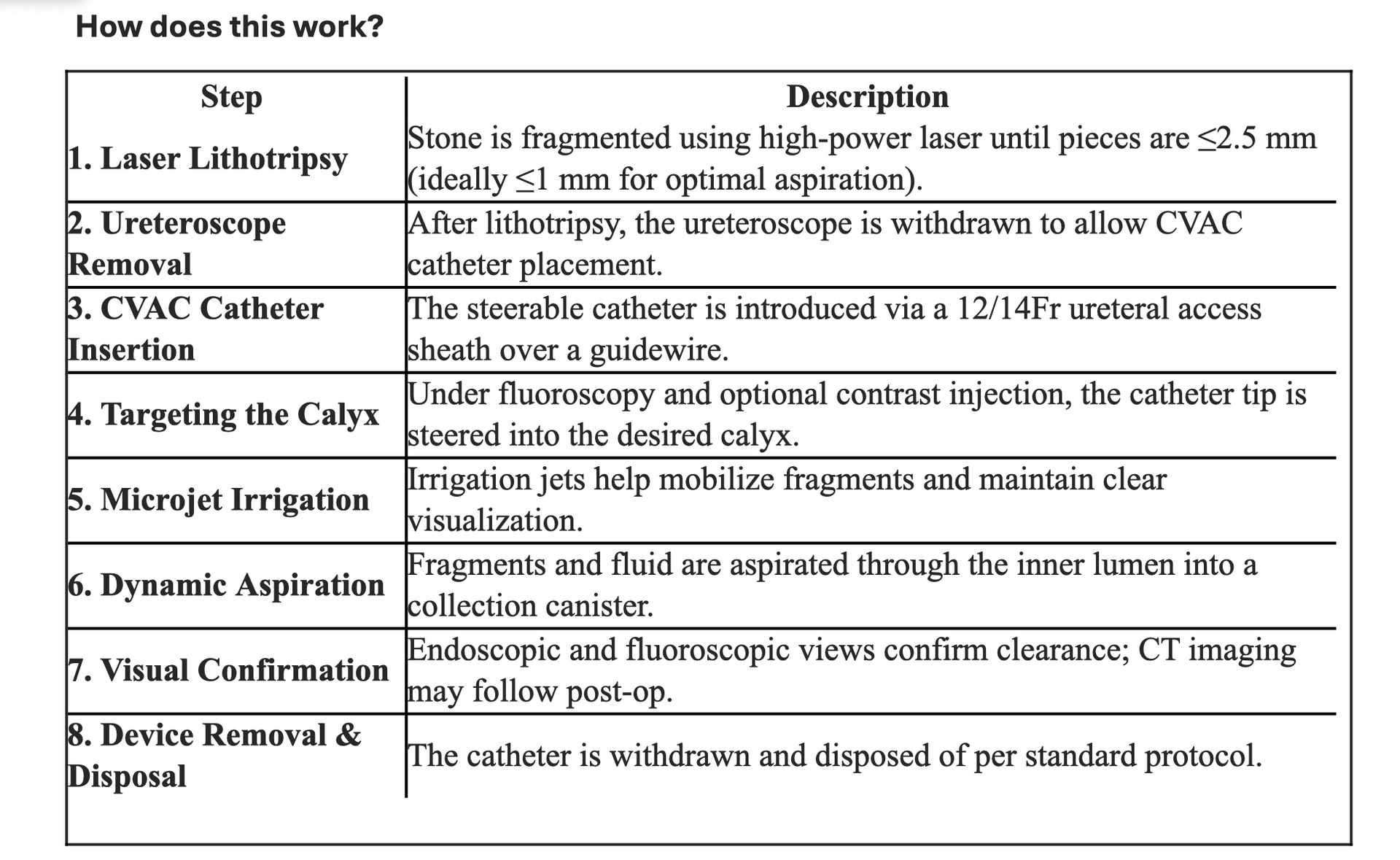
The SURE Procedure (Steerable Ureteroscopic Renal Evacuation) is a minimally invasive technique for kidney stone management using the Controlled Vacuum Assisted Clearance (CVAC) system. This single-use device enables continuous irrigation and aspiration during laser lithotripsy, enhancing stone fragment clearance from the renal collecting system.
Example of operative note:
“Following laser lithotripsy, a steerable CVAC catheter was introduced via access sheath. Under fluoroscopic guidance, microjet irrigation and aspiration were performed to evacuate stone fragments into the collection canister. Clearance confirmed endoscopically.”
Billing Information for Physicians
To report a cystoscopy with ureteroscopy and laser lithotripsy with steerable vacuum stone extraction for renal and/or ureteral stone, it would be appropriate to report code 52353, Cystourethroscopy, with ureteroscopy and/or pyeloscopy; with lithotripsy (ureteral catheterization is included).
Based on the CPT guidance above, if there was an insertion of a stent during this procedure, you would report code 52356 Cystourethroscopy, with ureteroscopy and/or pyeloscopy; with lithotripsy including insertion of indwelling ureteral stent (e.g. Gibbons or double-J type)
The device manufacturer recommends considering the use of CPT code 53899 (Unlisted procedure, urinary system) to represent the steerable vacuum aspiration of the kidney, in conjunction with either 52353 or 52356, depending on the procedure details. However, CPT guidance has not formally endorsed or confirmed this coding approach as of this time. The removal of the stone fragments are inclusive to the 52353 and 52356 procedure codes. If there is documentation of extra effort and time beyond the normal, modifier 22 may be applicable. As always, consult your payer reimbursement policies.
Billing Information for Outpatient Facility/Ambulatory Surgery Center
Use the HCPCS code C9761 Cystourethroscopy, with uteroscopy and/or pyeloscopy, with lithotripsy, and ureteral catheterization for steerable vacuum aspiration of the kidney, collecting system, ureter, bladder, and urethra if applicable (must use a steerable ureteral catheter)
The Device Code is C1741 Endoscope, single-use (i.e. disposable), urinary tract, imaging/illumination device (insertable)
Melanie Perrault, RHIA, CDIP, CCS
Senior Consultant, Audit at UASI
Melanie Perrault is a Senior Consultant in Quality at UASI, with extensive expertise in inpatient coding, CDI, and documentation integrity. She brings a strong educator’s mindset to her coding tips, helping coders and CDI teams strengthen clinical clarity, accuracy, and audit-ready compliance.
Works Cited
Calyxo, Inc.
(n.d.). Calyxo SURE Procedure.
Available at
https://calyxoinc.com/calyxo-sure-procedure/Calyxo
American Medical Association (AMA). (2025, February). CPT Assistant, 35(2), 28.
Available at
https://www.ama-assn.org/practice-management/cpt