April 22, 2026

How to Code Thyroid Eye Disease (TED) with New ICD-10-CM Codes

New ICD-10-CM diagnosis codes are now available to capture thyroid eye disease (TED) with greater specificity. These codes improve the ability to identify affected patients, support clinical tracking, and strengthen documentation for research, quality reporting, and patient outcomes.


What Is Thyroid Eye Disease (TED)?

Thyroid eye disease is an autoimmune inflammatory condition affecting the tissues around the eyes. Common features include:

  • Bulging eyes (proptosis)
  • Pain or pressure
  • Dryness or irritation
  • Swelling of the eyelids
  • Possible vision changes


TED is most commonly associated with Graves’ disease (hyperthyroidism) but may also occur with:

  • Hashimoto’s thyroiditis
  • Hypothyroidism
  • Euthyroid states


New ICD-10-CM Codes for Thyroid Eye Disease

New ICD-10-CM Codes for Thyroid Eye Disease

These codes allow documentation of laterality, improving accuracy and supporting medical necessity for treatment:

Code Description
H05.831 Thyroid orbitopathy, right orbit
H05.832 Thyroid orbitopathy, left orbit
H05.833 Thyroid orbitopathy, bilateral
H05.839 Thyroid orbitopathy, unspecified orbit

Treatment Considerations for Thyroid Eye Disease

These codes may be used to support medical necessity for treatments such as:

  • Teprotumumab (Tepezza) – the first FDA-approved therapy specifically for TED
  • Corticosteroids for inflammation control
  • Radiation therapy in more severe or refractory cases


Coding Example & Reminder for Thyroid Eye Disease

***Reminder: Don’t Forget Associated Thyroid Diagnoses. Always code the underlying thyroid condition to provide a complete clinical picture and support medical necessity.


Coding Example

Final diagnosis: Graves’ disease with thyroid eye disease affecting both eyes.


Codes:

  • H05.833 – Thyroid orbitopathy, bilateral
  • E05.00 – Hyperthyroidism with goiter


Melanie Perrault, RHIA, CDIP, CCS 

Senior Consultant, Audit at UASI


Melanie Perrault is a Senior Consultant in Quality at UASI, with extensive expertise in inpatient coding, CDI, and documentation integrity. She brings a strong educator’s mindset to her coding tips, helping coders and CDI teams strengthen clinical clarity, accuracy, and audit-ready compliance. 


Works Cited:

American Hospital Association. (2025). Thyroid eye disease coding guidance. AHA Coding Clinic for ICD-10-CM/PCS, Fourth Quarter 2025, p. 17.


Centers for Medicare & Medicaid Services. (2026). ICD-10-CM Official Guidelines for Coding and Reporting, FY 2026.


doctors hovering over operating table
By Katie Curry April 16, 2026
Review clinical indicators, coding rules, and documentation considerations for non-infectious SIRS, including R65.10 vs R65.11 and query guidance.
Graphic title, person sitting down and holding both hands to chest
By Katie Curry April 15, 2026
Learn when to code acute respiratory failure with hypoxia (J96.01), including clinical indicators, documentation tips, and CDI query opportunities.
Graphic image for  ICD-10-PCS Changes for April 1, FY 2026, doctor pointing to computer
By Katie Curry March 16, 2026
Review key ICD-10-CM updates effective April 1, 2026 including Parkinson’s disease indexing changes, respiratory failure coding revisions, and neuroendocrine tumor classification updates.
Child with cerebral palsy smiling during therapy activity with motor impairment and supportive care.
By Katie Curry January 26, 2026
Support accurate cerebral palsy ICD-10-CM coding with CDI guidance on clinical indicators, documentation requirements, and physician query opportunities.
CDI Tip Title Graphic, mom and baby sleeping text reads
By Katie Curry January 13, 2026
Clarify apnea of prematurity clinical indicators, treatment considerations, and CDI coding guidance to support accurate neonatal documentation and query decisions.
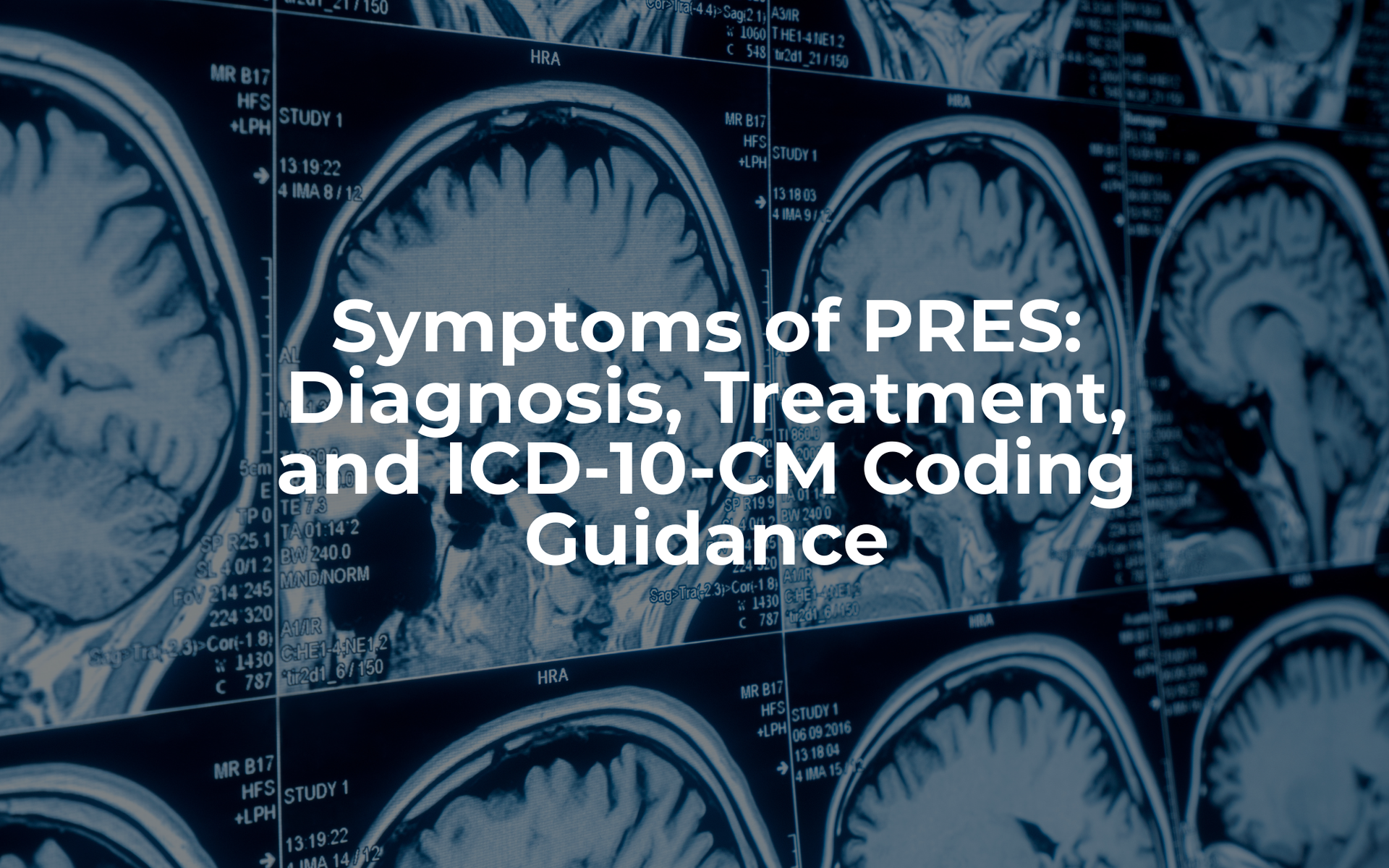
MRI brain scans illustrating symptoms of PRES with title text overlay.
December 9, 2025
Learn the symptoms of PRES, key treatment considerations, ICD-10-CM code I67.83, and documentation tips for CDI and accurate DRG assignment.
Microscopic immune cells interacting in cellular environment, illustrating immune effector activity
By Katie Curry December 1, 2025
Understand ICANS documentation and ICD-10 coding with guidance on the ICANS grading system, ICE score, clinical indicators, and CAR T-cell neurotoxicity.
Fingerstick blood glucose test being performed, illustrating screening and monitoring practices for gestational diabetes.
By Katie Curry November 3, 2025
Define gestational diabetes documentation requirements, key risk factors, and clinical details needed to support accurate ICD-10 coding, severity capture, and quality reporting.
Clinician pointing to anatomical kidney model illustrating acute kidney injury.
By Katie Curry October 20, 2025
Learn how to identify, document, and code acute kidney injury (AKI), including diagnostic criteria, staging, ICD-10-CM guidance, and CDI query considerations.
Blurred hospital scene symbolizing CDI review of firearm injury intent reporting.
By Katie Curry September 30, 2025
Learn how firearm injury intent is documented and reported in ICD-10-CM, including intent categories, external cause codes, and documentation considerations.
Show More